Essential Tips For Beginner Skiers
If you're new to skiing, getting started can feel overwhelming—but with the right preparation, equipment, and mindset, you'll be gliding down the slopes in no time. This guide covers essential tips for beginners, from choosing the right gear and mastering basic techniques to staying safe and avoiding common mistakes. Whether you're taking your first lesson or gearing up for your first ski trip, these practical insights will help you build confidence and make the most of your time on the mountain.
1. Preparing for Your First Ski Adventure
Before hitting the slopes, proper preparation is crucial for both safety and enjoyment. Start by getting physically ready at least a few weeks before your trip. Focus on exercises that strengthen your legs, core, and improve balance. Simple exercises like squats, lunges, and planks can make a significant difference in your skiing experience.
Consider taking a few cardio classes as skiing at altitude requires good cardiovascular fitness. Remember, being in good shape will not only make learning easier but will also reduce your risk of injury.
2. Essential Equipment Guide
Proper equipment is fundamental to your skiing experience. Here's what you need:
- Skis and Poles: As a beginner, rent equipment first. Choose shorter skis for better control - they should reach somewhere between your chin and nose when standing vertically.
- Boots: Properly fitted boots are crucial. They should be snug but not painful. Take time to get fitted by a professional.
- Helmet: Non-negotiable for safety. Ensure it fits properly and is certified for ski use.
- Goggles: Protect your eyes from snow, wind, and UV rays. Choose ones that fit well with your helmet.
3. Dressing for Success
Layering is key to staying comfortable on the slopes:
- Base Layer: Wear thermal underwear made from moisture-wicking material like merino wool or synthetic fabrics.
- Mid Layer: Fleece or wool for insulation.
- Outer Layer: Waterproof and breathable ski jacket and pants.
- Accessories: Warm socks (one good pair, not two), waterproof gloves, neck gaiter or scarf.
4. First-Time Techniques
Master these fundamental skills:
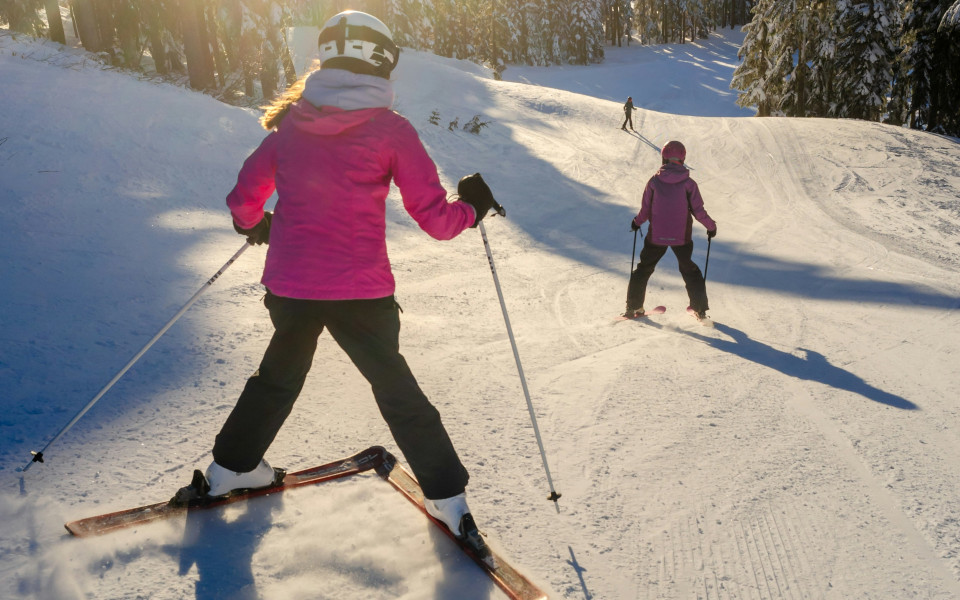
- The Pizza (Snowplow): Point your ski tips together and push the backs apart to form a triangle. This is your primary stopping technique.
- Basic Stance: Keep knees bent, weight forward, arms forward and relaxed.
- Looking Ahead: Always look where you want to go, not at your ski tips.
- Speed Control: Use the width of the slope by traversing across it to control speed.
5. Essential Safety Rules
Stay safe with these crucial guidelines:
- Always follow the ski resort's rules and signs
- Give way to skiers ahead of you
- Look uphill before starting or merging onto a trail
- Never stop in the middle of a run or where you can't be seen from above
- Learn and respect the difficulty ratings of slopes (green, blue, black)
6. Taking Lessons
Professional instruction is invaluable for beginners. Group lessons offer a cost-effective way to learn basics while meeting others at your level. Private lessons provide personalized attention and faster progress. Either way, professional instruction will:
- Help you develop proper technique from the start
- Teach you important safety principles
- Build your confidence systematically
- Help you progress faster than self-teaching
7. Common Beginner Mistakes to Avoid
- Leaning back instead of keeping weight forward
- Looking down at skis instead of ahead
- Trying too difficult slopes too soon
- Skiing without proper instruction
- Not staying hydrated (easy to forget in cold weather)
- Overdressing and overheating
8. Mental Preparation and Attitude
The right mindset is crucial for learning to ski:
- Be patient - everyone learns at their own pace
- Stay relaxed - tension makes learning harder
- Celebrate small victories
- Don't compare yourself to others
- Take regular breaks to avoid fatigue
Final Tips for Success
Remember these key points for your skiing journey:
- Start early in the day when you're fresh and slopes are well-groomed
- Take frequent breaks to rest and assess your progress
- Stay hydrated and maintain energy levels with snacks
- Listen to your body and know when to call it a day
- Most importantly, have fun and enjoy the learning process!